
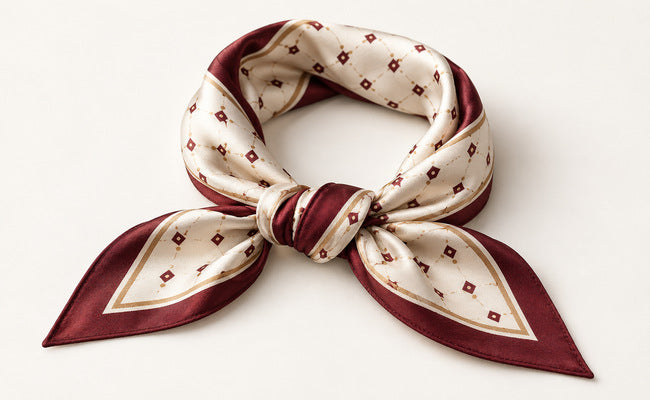

Multicoloured wraps
Multicolored Wraps
Multicolored wraps at UniqueYou – what you'll find here
This category gathers women's multicolored wraps: shawls, stoles, and larger square scarves, each featuring two or more distinct colors and patterns in a single design. A multicolored wrap can range from a quiet pairing of cream and dusty blue to a vivid mix of fuchsia, turquoise, and saffron. Colorful wraps can transform simple outfits into visually striking ensembles; they work draped over a winter coat, paired with a plain dress to cover bare shoulders, or looped loosely over jeans and a T-shirt to add a color accent where none existed. Browse the range below to compare patterns, materials, and sizes side by side.
Types of multicolored wraps
Multicolored wraps in this category differ by format, weight, and intended setting. Some are light enough for a July evening; others are dense enough to replace a scarf under a wool coat. Here is how the range breaks down.
Lightweight multicolored stoles for everyday outfits
These are long, relatively narrow wraps (typically around 180 × 70 cm) woven or printed in viscose, modal, or similar light fibers. Multicolored wraps can be lightweight and vibrant accessories that layer under blazers or trench coats without adding bulk around the collar. Multi-tonal prints such as watercolor gradients, abstract brushstrokes, or micro florals pair well with shirts, blouses, and unstructured jackets from March through October. Lightweight wraps are also ideal as beach cover-ups or resort wear when packed for travel, since they fold flat and weigh very little.
Warmer multicolored winter wraps and blanket shawls
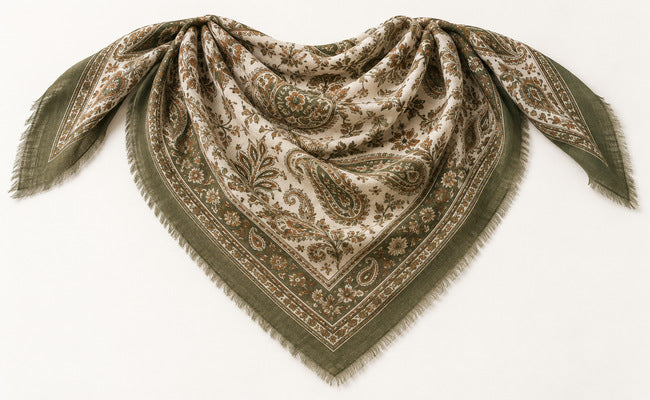
Thicker shawls in wool, wool blends, or acrylic fall into this group. Unique designs include paisley and floral patterns, and jacquard-woven textures that carry several colors through the fabric itself rather than relying on surface printing alone. Scottish mills in Paisley began producing jacquard-woven multicolored shawls in the early 1800s, and that heritage still influences the rich palettes seen in winter wraps today. A blanket shawl in burgundy, gold, and teal can brighten a neutral coat in black, navy, grey, or camel, working both wrapped close to the neck outdoors and draped loosely over the shoulders indoors.
Multicolored evening wraps for dresses and special occasions
Silk or satin wraps are best for elegant occasions, while cotton or wool is suitable for everyday wear. Evening wraps tend toward smoother finishes with subtle sheen, softer gradients, or refined prints rather than busy repeats. A multi-tone evening stole can pick up one color from a cocktail dress (bottle green, cobalt, dusty rose) without matching it exactly, keeping the look coordinated but not rigid. These pieces cover shoulders over sleeveless or strapless dresses at weddings, receptions, and summer parties. Colorful shawls are popular for both casual and formal occasions, making a single well-chosen wrap useful across multiple dress codes.
Square multicolored scarves and bandana-style wraps
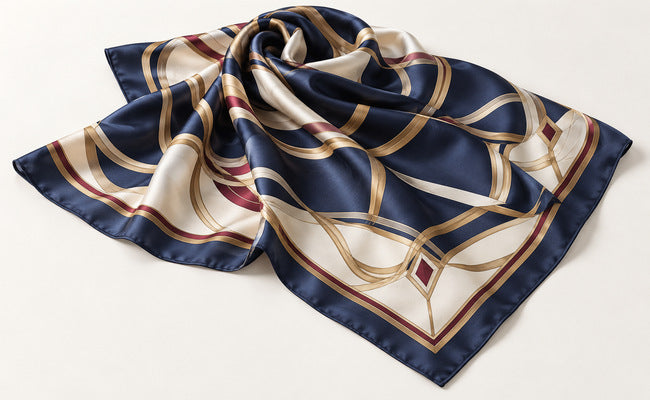
Square scarves (commonly around 90 × 90 cm, sometimes smaller at 50 × 50 cm) worn folded into a triangle or rolled into a narrow band. Their multicolored borders and center motifs let the wearer decide which shade dominates by choosing a fold. A square scarf can be tied near the neck of a white shirt, wrapped as a bandana on the head, or attached to a handbag handle as a compact accent. Multicolored wraps can be worn around the shoulders, neck, waist, or head, and squares are the most versatile format for that range of uses.
What to look for in a multicolored wrap
With multicolored wraps, the choice factors that matter most are material, color palette, pattern scale, and physical dimensions. The choice of fabric influences the style and occasion for wearing a wrap, while the number and contrast of colors determines how loudly the piece speaks in an outfit. Check product cards for exact fiber composition and measurements, and compare them with the coats, jackets, and blouses already in your wardrobe.
Material and seasonality
Lighter fibers (viscose, modal, silk blends, cotton voile) produce fluid, airy wraps with low thermal insulation; they drape close to the body and work well from spring through early autumn or in air-conditioned offices. Heavier fibers (wool, cashmere blends, thicker acrylic) create denser, more structured wraps that retain heat and block wind. Pashmina wraps are often made from cashmere wool; a typical pashmina wrap measures around 72 inches by 26 inches, making it narrower than a blanket shawl but warm enough for cold-weather layering. Multicolor shawls can be made from wool, silk, or cotton, and blends of natural and synthetic fibers often combine softness with better color retention. Exact composition is always listed on individual product pages.
Color palette and how it behaves in an outfit
"Multicolored" covers a wide spectrum. Soft combinations (cream, taupe, dusty blue) blend quietly into a neutral wardrobe; intense mixes (fuchsia, turquoise, saffron) stand out against muted clothing. Choosing at least one shade already present in your closet (navy jeans, a camel coat, a black dress) makes styling simpler, because combining colors from a multicolored wrap can create coordinated outfits without effort. High-contrast palettes draw the eye and let the wrap serve as a focal piece in an outfit. Lower-contrast or near-tonal palettes work better as a complement when the rest of the outfit already contains prints or strong color. A multicolored wrap adds dimension to monochromatic outfits; a single vivid shawl over an all-black look shifts the entire impression.
Pattern scale and visual effect
Small repeats (fine dots, mini florals, micro-paisley) tend to read as texture from arm's length, making them easier to combine with patterned blouses or printed dresses. Large motifs (oversized blooms, wide stripes, abstract swirls) create a bolder, more graphic effect and work best against plain knitwear and solid-color coats. Pashmina wraps can feature intricate paisley patterns where fine detail rewards closer viewing. Folding and draping hide or reveal different parts of the pattern; a wrap with a prominent border motif will show different color balances depending on whether it is looped, draped, or knotted.
Size, shape, and how the wrap sits on the body
Oblong wraps in this category typically measure around 180 × 70 cm; larger squares sit near 90 × 90 cm. Length determines styling options: longer wraps allow for double loops around the neck or loose ends hanging over an open coat, while shorter pieces stay closer to the neckline. Width matters for shoulder coverage; a wrap meant to serve as a light cape over a sleeveless dress needs enough width to comfortably drape over upper arms. Product photos showing a model wearing the wrap help judge proportions relative to everyday outfits.
How to choose the right multicolored wrap for you
The right pick depends on where you plan to wear the wrap, what it will sit alongside in your outfit, and how visible you want the color accent to be.
Planned use: coat, office, or occasion wear - Wraps chosen for daily layering over autumn and winter coats benefit from heavier, insulating fabrics. Office wraps work best in medium-weight materials that add color without bulk under a blazer. Evening and occasion wraps call for lighter, smoother finishes with refined prints or gradients.
Color intensity vs your wardrobe - If most of your clothing is neutral (black, grey, navy, beige), a high-contrast multicolored wrap becomes a focal piece. If your wardrobe already includes strong prints or bold colors, a softer palette avoids visual competition. Wraps can be styled in various ways for different occasions, so a versatile palette extends the number of outfits it works with.
Preferred way of wearing - Longer rectangular formats suit wrapping several times around the neck or letting ends hang over a coat. Smaller squares or narrower stoles work for compact knots near the neckline or under blazer lapels.
Comfort and care - Natural fibers (silk, wool, cashmere) feel softer against skin but often require hand washing or delicate programs. Some multicolored wraps are hand-dyed with eco-friendly dyes, which may need gentler treatment to preserve color. Synthetic blends tolerate more frequent washing. Some pashmina wraps are reversible, offering two styles in one; checking care labels before buying helps avoid surprises.
Season and layering - In winter, a thicker multicolored wrap in wool or cashmere blend provides real warmth layered with a coat. In spring and summer, a lightweight viscose or silk version works as a color accent over thin fabrics without adding heat. Multicolor shawls can be lightweight and vibrant accessories that transition across seasons if the weight is right.
Frequently asked questions about multicolored wraps
Below are answers to the most common questions about styling, sizing, and caring for multicolored wraps.
How do I match a multicolored wrap to my coat or jacket?
Pick one color from the wrap and repeat it in the coat, handbag, or shoes. Plain outerwear in black, navy, grey, beige, or camel lets a colorful wrap stand out as the outfit's main accent. A wrap that shares tones with the coat (brown and caramel paired with a camel coat, for instance) creates a calmer, more blended effect than strong contrasts. Etsy features over 1,000 colorful shawls and wraps, which gives a sense of how many palette combinations exist; narrowing your search to one coat color simplifies the decision.
Can I wear a multicolored wrap with patterned clothes?
Combining patterns works when the two pieces share at least one similar color or have different scales (a blouse with a small floral print paired with a wrap carrying a larger paisley motif, for example). Keep the rest of the outfit simple; solid trousers or a plain skirt prevent visual clutter. Try the combination in front of a mirror and step back a few paces; if the prints blur into each other, the scales are too similar.
Which size of multicolored wrap should I choose for dresses and evening outfits?
For covering shoulders with a sleeveless dress, a wider shawl that drapes comfortably over upper arms is more practical than a narrow stole. For a subtle accent near the neckline of a dress or blouse, a smaller square scarf or narrower stole is enough. Pashmina wraps are popular as gifts for special occasions partly because their dimensions (around 72 × 26 inches) offer enough fabric for shoulder coverage without the bulk of a blanket shawl. Compare the listed dimensions with a scarf or wrap you already own to gauge coverage before ordering.
How should I care for a multicolored wrap so the colors stay vivid?
Follow the care instructions on each product label. Shawls can be made from materials like wool and silk, and blends containing those fibers generally need hand washing or a delicate machine program in cool water. Avoid harsh detergents and very hot water, which can cause dyes to bleed. Dry flat, away from direct sunlight, to preserve both color and shape. Wraps with printed rather than yarn-dyed patterns are more susceptible to fading if exposed to prolonged sunlight or friction.
Browse multicolored wraps at UniqueYou
A multicolored wrap can serve as the loudest piece in an otherwise quiet outfit or quietly tie together several colors already present in your wardrobe. Start by thinking of one coat, dress, or shirt you wear most often, then scan for wraps with matching or contrasting palettes. Compare materials, patterns, and sizes across the collection to find a version that fits the way you actually dress.
FINEST MATERIALS
Softness, comfort and attention to detail.

Express Delivery
Within 24 hours by courier to your home or a pickup point.
EASY RETURNS
Shop with confidence, with the option to return.
SECURE PAYMENTS
Choose your preferred payment method.