Article: How to choose a shawl: a guide to materials, sizes and colours
How to choose a shawl: a guide to materials, sizes and colours
A good shawl suits your day just as well as it suits your coat. It keeps you warm on the way to work, fits neatly beneath a collar or falls loosely over your shoulders for an evening out. Before choosing a colour, think about how you want to wear it. The material, size and finish matter just as much as the pattern.
At UniqueYou, we value accessories you can reach for on many different occasions. This guide will help you narrow down your choice: from a soft scarf for cool days to a light square scarf that changes the character of a simple shirt.
Start with how you will use it, then choose the material
Begin with three things: the weather, your outerwear and the way you want to tie it. With a wide-lapelled coat, you can choose a more generous shawl. A lighter, slimmer style is often more comfortable with a fitted jacket because it does not create a bulky layer beneath the chin. If the accessory will remain part of your outfit after you take off your coat, notice how it sits with a blouse or dress.
Put together two outfits you wear most often. Your chosen shawl should look good with at least one of them without requiring you to buy any more clothes. It is a simple way to find an accessory you will genuinely use.
Cashmere and wool — when you want soft warmth
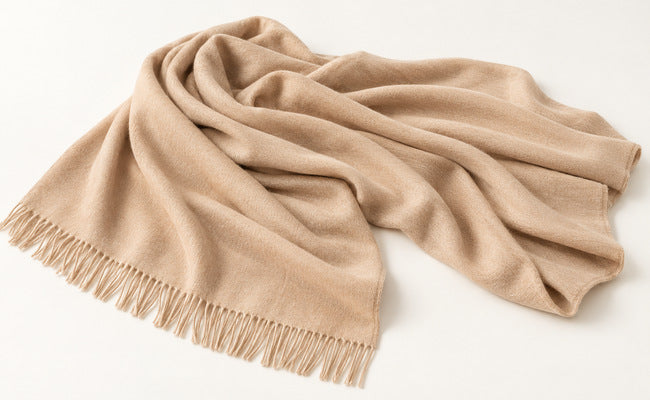
A cashmere scarf is worth considering if you enjoy a soft feel and understated, harmonious outfits. A plain style in camel, grey or black is easy to pair with a wool coat and a simple jumper. Before buying, check the exact percentage of cashmere in the composition and the dimensions: the collection name alone does not describe every feature of a particular style.
A wool shawl offers a wide choice of textures, from a fine weave to a fluffier finish. If you like expressive layers, let it fall freely over the front of your coat. If you prefer a more structured shape, choose a less voluminous style and wrap it once around your neck.
Do not judge warmth by the fibre name alone. Thickness, fabric construction, the size of the shawl and the number of layers created when it is tied all matter. If your skin is sensitive, your comfort where the scarf touches your neck is especially important.
Silk and satin — understand the difference
Silk is the name of a fibre. Satin describes a fabric with a characteristic weave, not one specific raw material. A satin scarf can therefore have different compositions, including silk. The sheen visible in a photograph is not enough to identify the material.
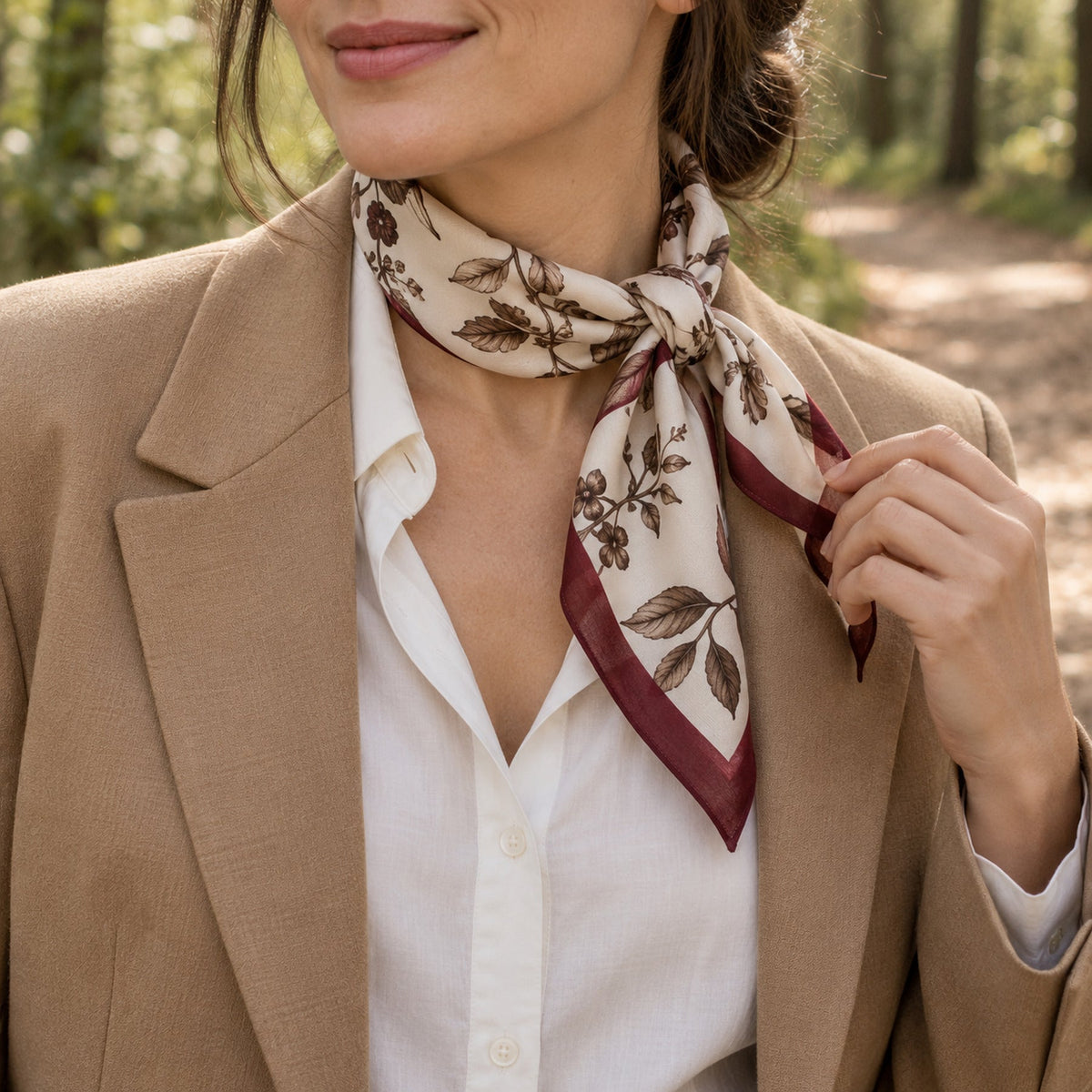
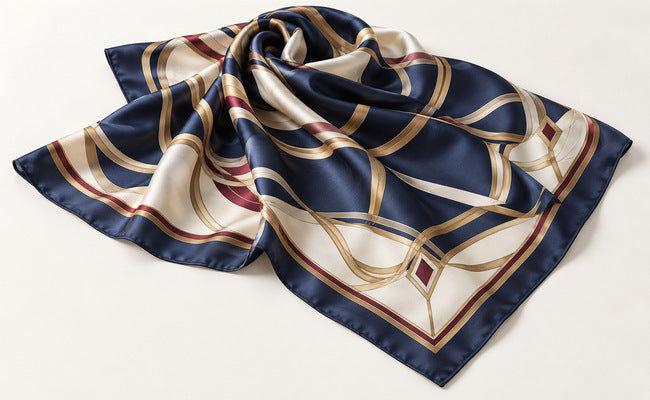
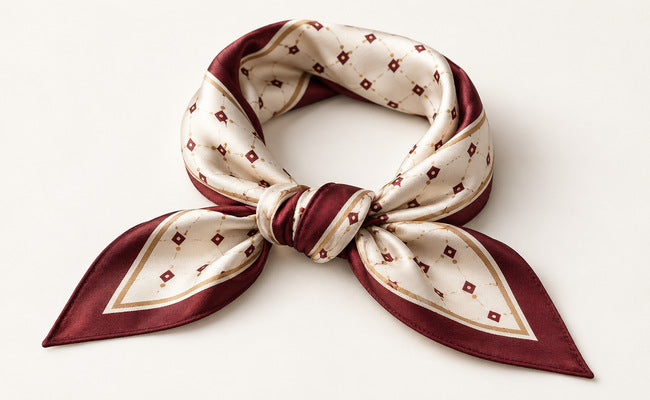
A smooth square scarf works well as an accent near the face: beneath a shirt collar, at the neckline of a jumper or with a blazer. When choosing one, look at both the full pattern and the border. Once folded into a narrow band, the border may become the most visible detail.
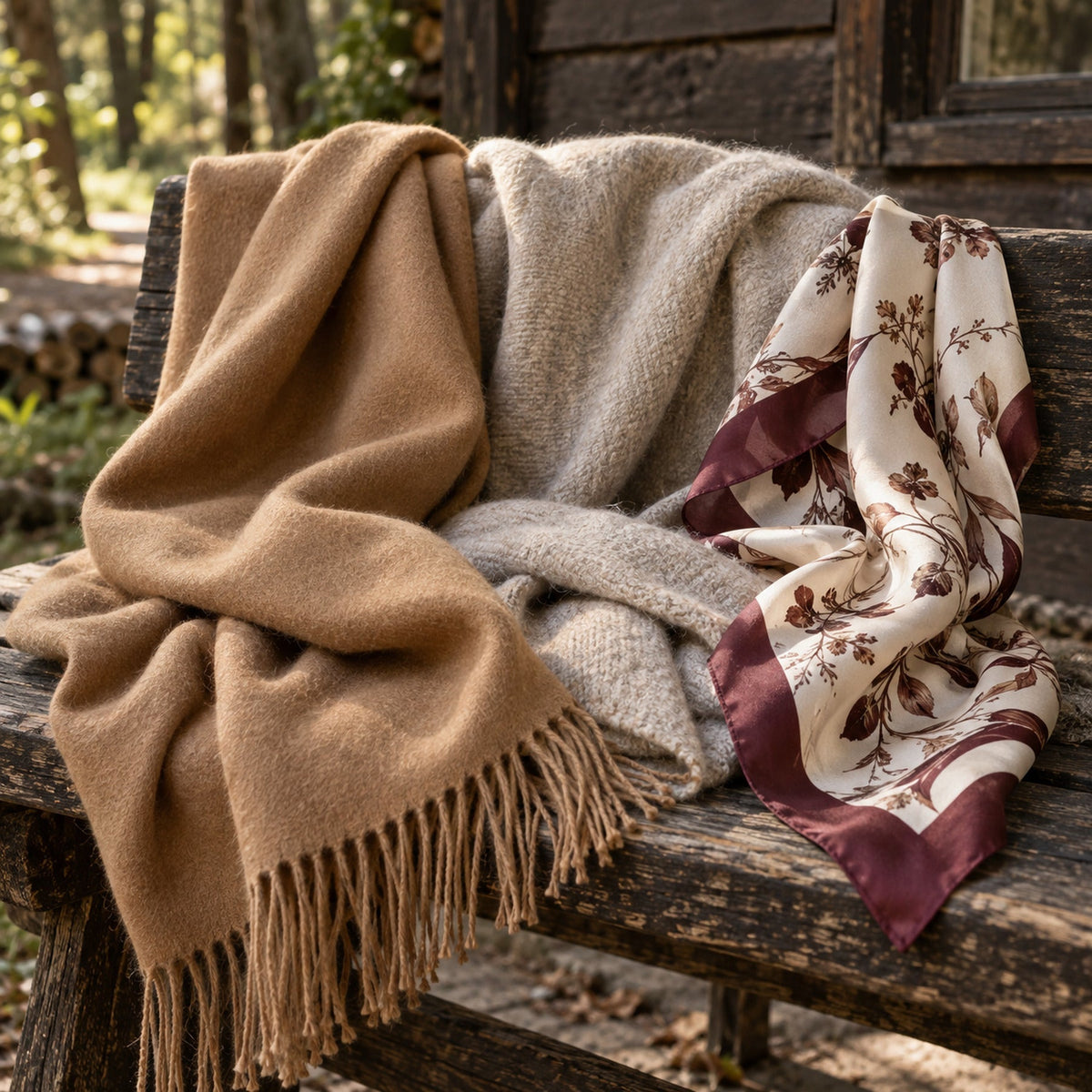
If you are looking for an accessory for a calm, versatile wardrobe, begin with two or three colours that already recur in your clothes. A cream background, brown illustration and burgundy detail can bring together a white shirt, a camel coat and a dark handbag.
Pashmina, cotton and viscose — read the description of the individual style
For a shawl described as pashmina, check the composition information. Do not treat the name itself as proof of a particular cashmere content. Base your choice on the listed fibres, size, thickness and care instructions. With a reversible style, look at both colours: you can turn back the edge so the second side becomes part of the outfit.
With cotton and viscose, compare the finished fabrics too. Check whether the shawl is light or substantial, how it drapes in the photographs and whether it contains other fibres. For a light trench coat, you might choose a more delicate texture; with a simple dress, consider a style that falls freely over the shoulders.
Which size should you choose?
Dimensions help you predict the effect better than terms such as “large” or “classic”. Before buying, lay out a tape measure or compare the measurements with an accessory you already own.
- 90 × 90 cm square scarf: provides enough fabric to fold into a band, make a loose knot at the neck or create a triangle over the neckline.
- 200 × 70 cm shawl: offers more width for covering the shoulders and lets you display the pattern or the reverse side of the fabric.
- 200 × 60 cm scarf: is slightly narrower; try a similar format with your coat and check the length of the ends after wrapping it around your neck.
These are examples of formats, not a guarantee that every piece will drape in the same way. A soft, fine fabric takes up less space when tied than a fluffy material with identical dimensions.
Colour and finishing details worth seeing up close
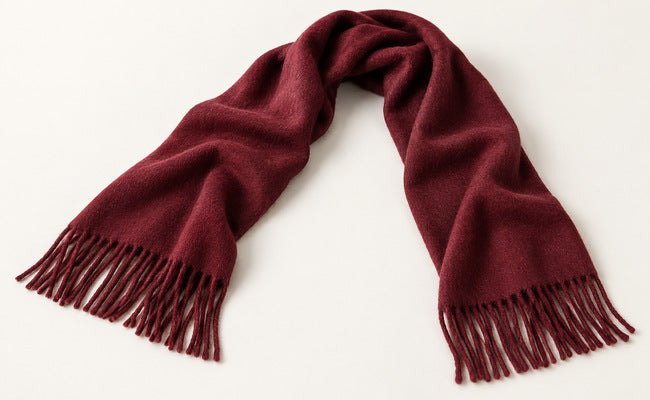
With a beige coat, choose cream or camel for a gentle transition between colours. Chocolate brown adds contrast, while burgundy creates a stronger accent. With black, a light square scarf can make its pattern stand out clearly. You do not have to match your shawl to your handbag shade for shade — a shared colour or similar tone is enough.
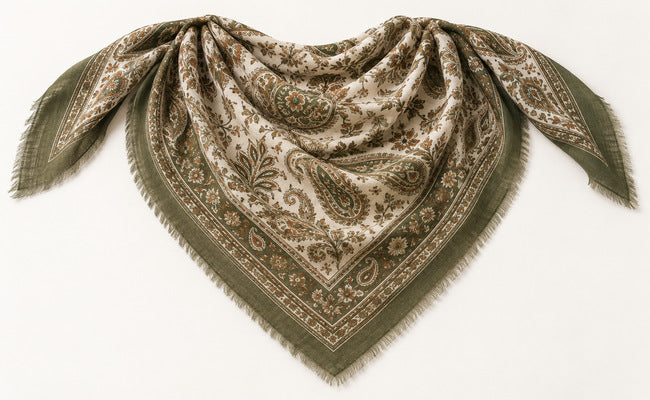
In close-up photographs, examine the edges, fringes and corner finishes. Are you looking for a relaxed, soft effect or a crisp, smooth line? These small details affect how the accessory looks once worn.
Five questions to ask before buying
- Which clothes will I wear this style with?
- Do I mainly want warmth or a decorative accent?
- Do I know the exact composition and dimensions?
- Am I comfortable with the care method specified by the manufacturer?
- Do I also like the part of the pattern that remains visible after folding?
Choose an accessory that fits naturally into your wardrobe. Discover UniqueYou shawls and scarves and compare styles by material, size and the colours you like to wear.